 Alan Simpson
Surviving our difficult times
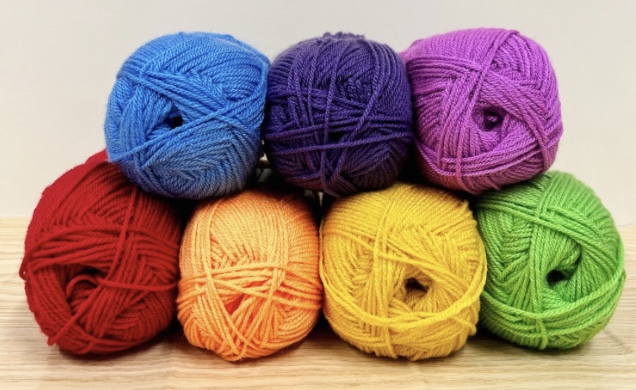
As a child, I remember finding a box in which my mother kept a collection of small, tightly knit, woollen squares. Asking what they were for, my mum answered ‘They were for the war’.
During the dark years of World War 2 she, and others on the street, knitted leftover bits of wool into small squares. When it was safe to do so, they would meet in someone’s house and knit the squares together into useable blankets. The finished blankets were shared around.
It was a way of keeping in touch with one another; a reassurance in troubled times. It was also a way of (collectively ) keeping warm.
These images came back to me as I listened to various Ministers advising everyone to stock up on water, tinned foods and battery powered radios in anticipation of some systemic crisis. Within moments, supermarket shelves were being cleared as the public tried to get their panic buying in early.
This isn’t our best approach to staying safe.
The gathering storms
As the recent ‘People’s Emergency Briefing’ documentary makes clear, we are now locked into a meteorological roller coaster. It is what comes from ignoring decades of warnings from climate science. Such is life. Add this to the disintegration of global institutions and norms and we have good reasons to be anxious. But personal stockpiling is not the answer.
What my mum understood was that common security is what underpins personal security. Today, we would call it ‘resilience’. This, rather than panic buying, is what politicians need to address. It may also be an antidote to the alienation and cyber-sabotaging the IT revolution brings with it.
Wars (by other means) are now fought more by hackers and drones than conventional armies. You don’t have to be a bitcoin investor to become a scam victim. The more reliant we are on internet lifestyles, the more vulnerable we are to scammers. What you can trust becomes an increasingly elusive quest. This is where government – particularly devolved government – must come to the fore. Communities need to become the core of both local accountability and credibility. We have to re-configure our economics to make this so.
An economics of accountability
Tomorrow’s economics must be the antidote to globalisation; a more layered mixture of localised accountabilities, common ownership and national/global interdependencies. There are lots of examples of how this can work
In Montréal, a community-based organisation called Lufa Foods has built greenhouses on top of the flat roofs of factory and office buildings. Then, using hydroponics, they grow foods with and for the local community. They now supply some 20,000 shopping trolleys of food per week.
Liège, in Belgium, set itself a duty to meet 50% of its food needs from within the region within the next 5 years. It is a variation of the broader Slow Food movements found in Italy and France. Some of these are underpinned by discounted business rate charges for shops selling only local (accountable) produce. Liège also sponsors farmer cooperatives to smooth the process. It shifts the dial in favour of common ownership rather than global conglomerates.
A coalition of European cities is also calling for an EU-wide strategy for urban food production based on radically reduced food-miles, sustainable food production and community-wide food security policies. One of the key points repeatedly made is that putting poor communities at the heart of this directly addresses the 20% of food poverty rooted in our poorest areas.
Fuel poverty too
As part of its post-war settlement, Germany was obliged to have a system of regionalised governance. This included decentralised energy systems. Here, local accountability is built in as part of resilience planning. Critically, it involves treating devolved systems more as public assets rather than speculative fiefdoms. Denmark has followed the same path.
Unlike the UK, German communities that generate their own renewable energy have first use of it too … at wholesale prices … before any surplus goes into the national or regional grid. If you want to cut the energy bills of the poorest, this is where to start. Solar on south and west facing roofs, schools, factories and office blocks all doing the same. And sub-stations re-purposed for battery storage and energy balancing.
This isn’t fanciful. It already exists in large parts of Europe and beyond. In Paris, for example, every car park with 90+ places has to have a solar rooftop. In the UK, we have allowed energy policy to be dictated by large corporate interests rather than community ones. The price for doing so lands on everyone’s bills.
When Labour nationalised energy in 1947, the National Grid was referred to as ‘the Nation’s strategic reserve’. It was about delivering common security, not private profitability. This is the concept we have to get back to. And in the process we’ll re-discover the legion of jobs needed to install and maintain tomorrow’s sustainable energy systems.
This isn’t just about skills and wages. It is also about re-learning how to work together.
Maxxing, mogging and quiet-quitting
Each year, the Oxford Dictionary adds new words to its lexicon. The latest ones include maxxing, mogging and quiet-quitting. These describe the processes of bingeing-out on jigsaw completions or books read/week etc, mimicking someone well known, and the ways in which remote workers do the basic parts of their job but avoid offering to do more.
What links the new words is that they are individualised, on-line activities. Direct, in-person, collective engagements are all missing. We complain about a generation of young people lacking social skills but disregard the technologies that increasingly capture and isolate them.
Then, while big-tech walks off with untold wealth that they syphon from the system – always ditching secure jobs in the name of productivity gain – what they leave behind is a social media framework that plays the poor off against the dispossessed.
Reversing this is where community rebuilding has to start and where most of the climate myths have to be demolished.
The addiction to crises
Fossil fuel lobbyists are desperate for MPs to approve more North Sea drilling. More than that, they want the subsidies that come too. But redirect those subsidies and Britain could insulate all the houses of its fuel-poor. This is the connection politicians fail to grasp. Championing it – with all the underpinning jobs and skills programmes – is a cornerstone of both climate resilience and political credibility.
So too is changing the rules of the climate game. It is where politicians could be so much more robust. Setting a limit on sewage discharges – beyond which no management pay increases or dividends could be paid – would completely change the culture of the water industry. But such a regime should have a public sector dimension too. So let’s begin with the Environment Agency.
Andy Burnham is right to devolve responsibilities to regions and localities, but much will hinge on the powers they are given. Flood-risk mitigation may be the most urgent and challenging.
Guy Singh-Watson, founder of the Riverford Wholefood collective, has long railed against the cost and delays in the Agency’s processing of farm-based proposals for flood (and drought) relief measures. If Regional Mayors are to deliver remedial policies that work they need the power to set timetables (and fines) that force culture change in the Environment Agency itself.
Climate resilience needs wartime powers. The floods won’t wait. Farmers can’t drain and farm. Public transport can’t move. Public services can’t deliver. These are far more disruptive threats to the UK than any foreign power invasion. So, if devolved government is to become the order of the day, let it be devolved government with a big stick.
To survive the crisis we have first to knit whatever squares we can. Real resilience then hinges on how we stitch them together. This is how communities will survive and how young people can then shape a different future.
In the end, my Mum was right. A politics of patches might just get us through… as long as we remember to collectively stitch the parts together.
Alan Simpson
November 2026