Alan Simpson
Iran’s blocking of the Strait of Hormuz, in response to Trump/Netanyahu’s illegal war, has thrown the world into chaos. It triggered a cascade of crises that was long overdue. Sadly, we seem to be chasing all the wrong responses.
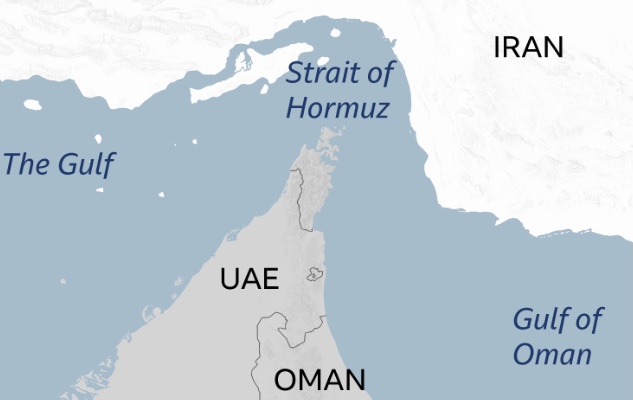
Spiralling oil and gas prices spill over into the costs of food, fertilisers, helium and rare metals. Large swathes of the global economy have begun to grind to a halt. What should have been the moment for a pivotal rethink – both of climate stability and sustainable economics – has been diverted into the pursuit of false presumptions.
The worst of these is the suggestion that Britain must abandon the poor if it wants to defend the nation. Only the Right benefits from such folly.
It was understandable that the press would allow (Lord) George Robertson to define choices in this way. His former roles in both NATO and the Labour government guaranteed him a platform. What no one pointed out is that Robertson is now Senior Advisor to a major firm of US weapons exporters and that he ducked all the better ways of paying for security and defence.
The Defence Dilemma
Trump’s debacle in the Middle East puts Britain’s defence spending under a new microscope. How do you defend yourself in a world of asymmetric warfare?
Iran didn’t need to match the USA to have disruptive response strategies of its own. Cheap drones were used to down expensive planes and missiles. Blocking the Strait of Hormuz has been more effective than having a whole fleet of battleships to confront the US navy. And, in return, it is clear that the US/Israeli approach to modern warfare has been to destroy social infrastructures rather than military battalions.
In any security rethink, Britain needs to ask different questions. How would we defend our undersea interconnectors? What would be the military answer to systematic hacking of IT systems that the NHS, transport systems and everyday commercial/work transactions depend on? Modern warfare is no longer a head-to-head collision of human armies. We need a conversation about what this means.
For those of us implacably opposed to nuclear weapons it also opens fresh questions about Trident. Even before Trump’s lurch into piracy, Britain’s claim to have an ‘independent’ nuclear deterrent always ducked the question of US control over its targeting. Now, Trump would probably demand we give the NHS to Palantir as a condition of any cooperation. If a defence rethink is in order, let’s begin by dropping the nuclear delusion.
Common Security
NATO also looks like a busted flush. Farage would hate it, but a new approach to European Common Security is what’s needed. So, let’s begin this and say goodbye to our existing US air bases. We could use the land for much needed housing developments.
Then Britain needs to put peace-building at the heart of defence thinking. Across the Middle East (and way beyond) whole landscapes are being razed to the ground. Diplomacy must be at the heart of overdue peace-building processes. And the armed forces need to be seen more as an international Peace Corps than a series of ever-ready combat units.
Rebuilding bridges, roads, basic services and social institutions will be at the heart of tomorrow’s common security. Lord Robertson never even gave this a mention. But it is central to any global response to the post-Trump/Netanyahu plundering.
Of course military technology comes into the picture too. This may be difficult. The MOD record on weapons procurement is dreadful. They barely look capable of designing a wheelbarrow let alone a modern weapons system. If defence increasingly focusses on smart technologies then Government spending must ensure these are securely rooted ‘onshore’. This means being stakeholders in the process, not just the provider of tax concessions.
So how might Britain pay for such a Defence and Security plan? The answer is not by cutting welfare benefits.
What always gets overlooked is that the poor are more ‘patriotic’ spenders than the rich. They put their benefits into the Post Office or local bank. They buy goods from local shops. They use local services and meet in local cafes. In contrast, the rich ship their money offshore. Tax Justice and the PCS trade union estimate that this costs the Exchequer an annual loss of tax revenues of £120 billion. This is where you start.
Money, money, money
One other suggestion has been the issuing of Defence and Security bonds. But a simpler way would be through the banking system itself. The UK does not place minimum ‘reserve requirements’ on commercial banks. Britain could require banks to hold 2% of their deposits as Security Reserves within the Bank of England. In turn, these could be used to invest in UK firms (using UK banks) to deliver UK security solutions.
This could also be the pretext for a complete revision of banking and contracting requirements. UK defence contracts should require UK banking (or, if part of a collaboration, an equal split with international partners). Offshore accounting should become an automatic contracting disqualification. And, at a personal level, it should debar you from holding public office in the UK.
I know this would disqualify Nigel Farage and a host of Tory/Reform luminaries from holding public office, but it’s about time we picked a fight with the rich rather than the poor. Parliament should be run on an OMOJ basis – One Member One Job – or at the very least limit outside earnings to match the basic MPs salary. It is at the top of the tree that the Exchequer loses most, not the bottom. So start where the money is.
Energy Bills
At long last, the Chancellor is offering to change the rules that allow gas to set UK energy prices (when renewables are forcing real prices to tumble). The rest of Europe looks at us in disbelief. We are the hostages of a gas mafia that goes unchallenged.
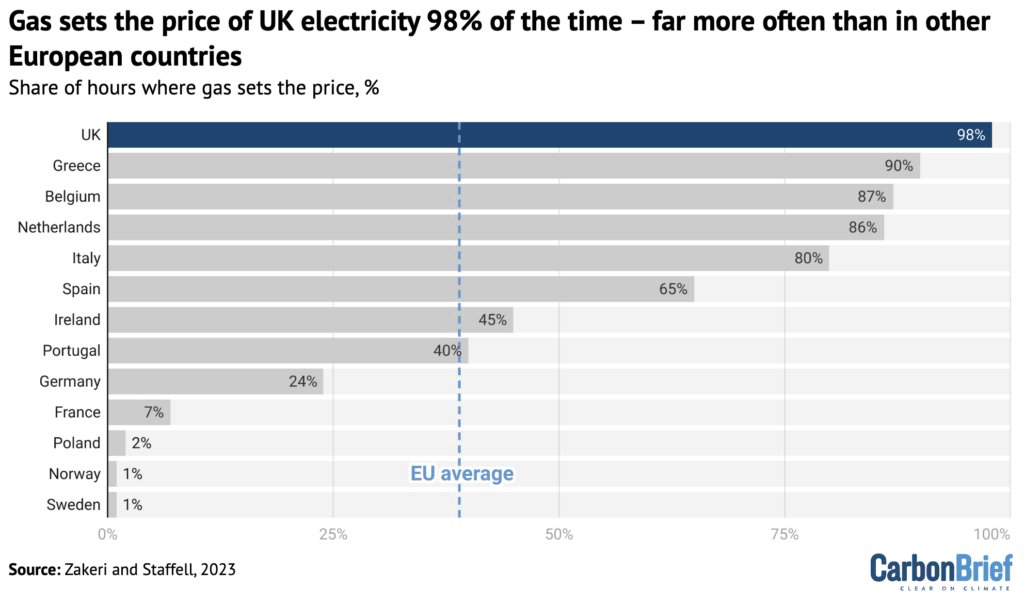
If gas has a balancing role it should not be the energy price setter. It’s role must be as a not-for-profit, nationalised, security mechanism, not as a way of holding the public to ransom. Even then, the future is going to be found more in (renewable) energy storage and a network of decentralised grids, less susceptible to hostile external sabotage.
In such a scenario we wouldn’t be paying renewables generators to switch off when there is a surplus. Their energy would go into storage or to the high energy sector. Balancing could still include gas, but within a model closer to the original grid concept in 1945. The National Grid was then referred to as the nation’s ’strategic reserve’; a safety net not a privatised profit stream. It is a notion we should return to.
Never waste a good crisis
There is a silver lining to the disaster that is Donald Trump. It is that things that should have been changed decades ago now become the last remaining positive choices as a way through today’s crises. But they can’t be tiptoed into. The days of gradualism have gone. Corporate vultures fill the corridors of government, selling ‘solutions’ that are really yesterday’s economics on opioids. The poor are blamed for becoming unaffordable. And the planet gets dismissed as an inconvenient externality.
Trump and Netanyahu may have brought a wrecking-ball to international politics and peace-making, but ditching all that they represent is now our best hope of making it through the crisis. It is a transformation that requires courage far more than caution.
Alan Simpson
April 2026


 Alan Simpson